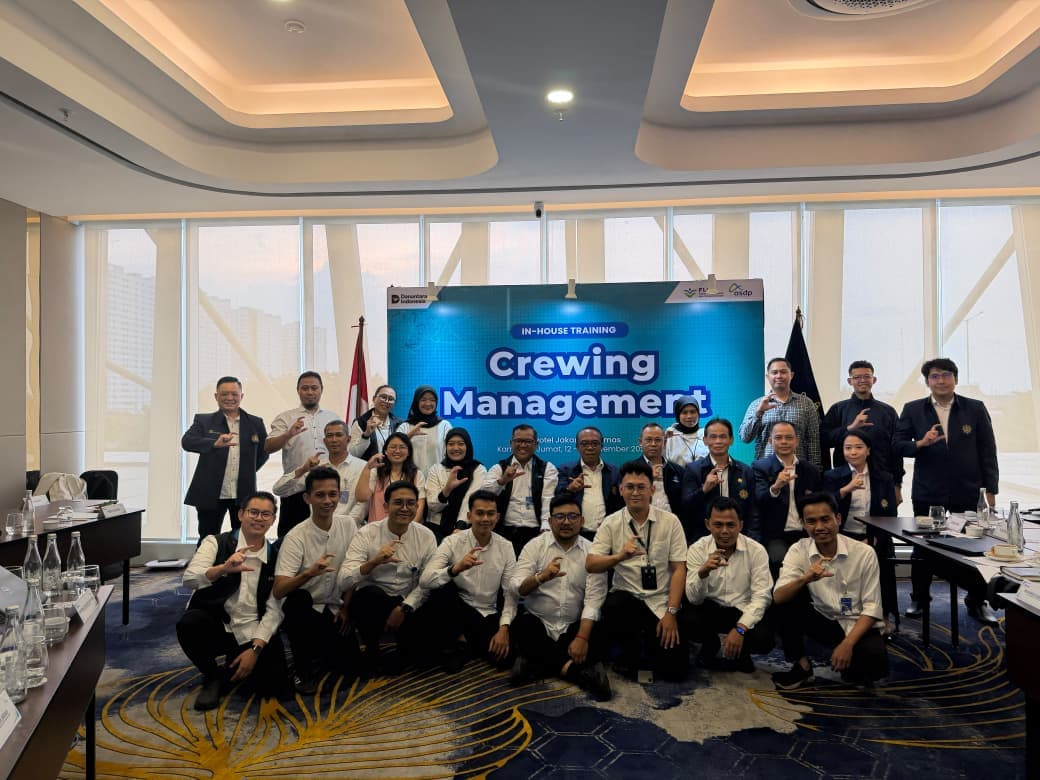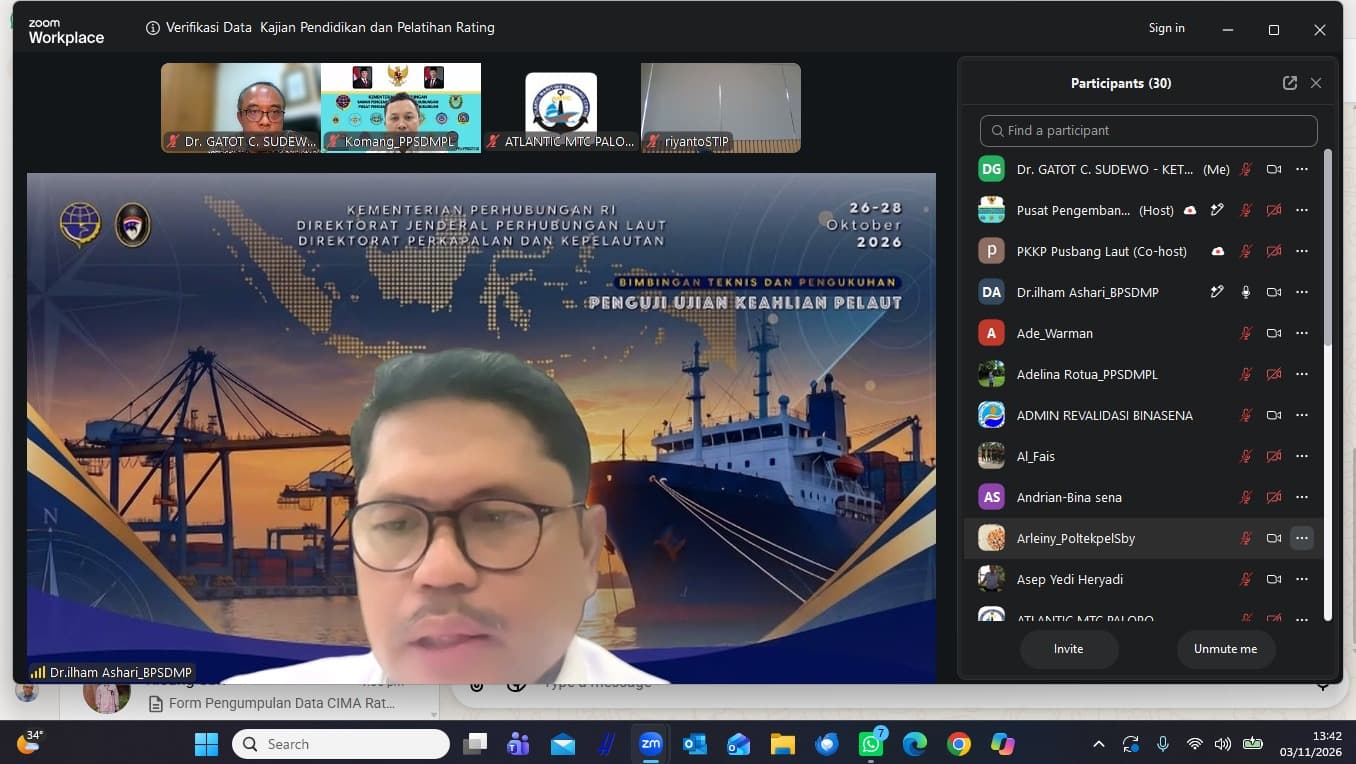
MN, Jakarta – The Indonesian Maritime Practitioners Association (Pramarin) recently held a discussion on the problems facing Indonesian seafarers at the Aditya Aryaprawira building, Kelapa Gading, Jakarta (19/10). The discussion, opened by the Chairman of Pramarin's Board of Trustees, Ir. Adharta Ongkosaputra, aimed to find solutions to the problems currently afflicting Indonesia's seafaring world. From the issue of seafarer quality — both language and technical ability — to the problem of recruitment by shipping companies, these were the main subjects of the discussion. Conflicts between domestic regulations were also a hot topic in the discussion, which was attended by seafarer communities, shipping companies and other relevant stakeholders. “We must find solutions that we will convey to the government. That is why this discussion must decide on those solutions,” said the Deputy Chairman 10 of Pramarin for Education, Training and Human Resource Development, Capt. Asnar Sitompul, who guided the discussion. He stated that improving the curriculum and syllabus in seafarer education was also a focus for Pramarin in looking at the current problems of seafarers. To bring this about, Pramarin will join hands with other stakeholders to build qualified Indonesian seafarers. Capt. Akhmad Subaidi of CIMA (Consortium of Indonesian Manning Agencies) reviewed the many obstacles in manning today, which have had the effect of reducing international confidence in Indonesian seafarers.
“There are still many weaknesses in PM 84 of 2013, which actually make it harder for companies to send seafarers abroad, and there is also no control from the government, so many companies can easily send seafarers abroad without holding a SIUPPAK,” said Capt. Akhmad Subaidi. Seafarer training standards, which should in fact refer to the provisions of STCW — in both curriculum and training methods — are not fully implemented by training centres. What mostly happens is that training centres merely satisfy the administrative requirements and hand out certificates. The training is therefore no more than a formality to obtain a certificate, without regard for whether the seafarer actually has the knowledge, competence and skills that match the certificate they hold. “Rather than improving, the quality of Indonesian seafarers is now declining. Many of our maritime school graduates are not yet ready to work on board. The language issue also remains a major obstacle for our seafarers,” he explained. He has repeatedly proposed quality improvements to the government — in this case BPSDM of the Ministry of Transportation and the Directorate-General of Sea Transportation — but has yet to receive a satisfactory response. According to him, there are cadets who have never sailed, or who lack sufficient sea service as required by regulation, yet obtain a diploma and even take up positions as officers on board. Many holders of a Certificate of Competency (COC) or Certificate of Proficiency (COP) in line with the STCW Manila Amendments 2010 nevertheless lack quality. Job opportunities on foreign ships are in fact very large; many foreign companies still ask for Indonesian seafarers, yet in practice it is so difficult to find seafarers who meet the requirements. “What company would hand over a ship worth that much to an incompetent seafarer? We do not lack seafarers in number; the truth is we lack qualified seafarers,” he stressed. Furthermore, there is no valid data on Indonesian seafarers: how many Indonesian seafarers are active, how many are officers or ratings, how many work domestically, and how many work abroad. CIMA has admitted it does not yet have definite data. “The Director-General of Hubla once asked CIMA that too — well, the government should know better,” he joked. The seafaring issue discussed next was the conflict between the BPJS Law and the Shipping Law regarding seafarer guarantees. According to him, the existence of BPJS creates a double charge for companies. “Seafarers are now required to join BPJS Ketenagakerjaan, even though all allowances and compensation for seafarer protection are already regulated in PP 7/2000. So this adds to the existing conflicts between regulations,” he stressed again. “Everything relating to the Sea Employment Agreement is already determined and must meet minimum standards guided by national and international regulations, including matters relating to seafarers' social security (insurance),” he concluded. The current BPJS Ketenagakerjaan programme falls far short of meeting the provisions in PP 7/2000. Pramarin itself will gather all the input from the discussion. It is then ready to bridge the relevant stakeholders and the government in seeking the best formula for the progress of Indonesian maritime affairs.
(Adit/MN)