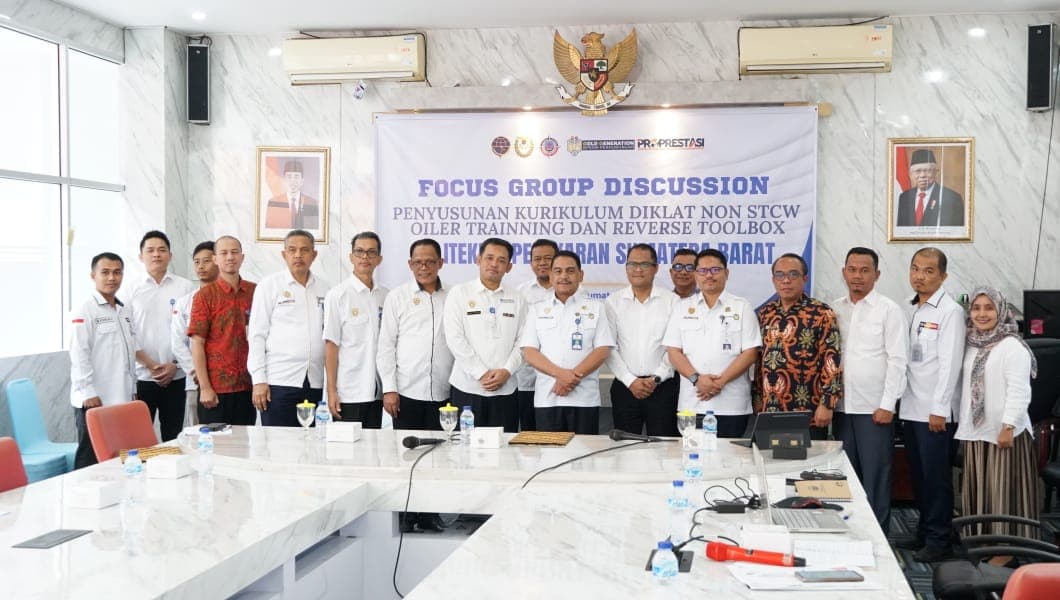
West Sumatra, 28 June 2024 – CIMA received an invitation from the Human Resources Development Agency (BPSDM) of Sea Transportation to attend a Focus Group Discussion (FGD) on drafting the curriculum for non-STCW training (Standards of Training, Certification and Watchkeeping) for oiler and Reverse Toolbox courses. The event took place in West Sumatra and was attended by a range of maritime stakeholders.
At the FGD, Bapak Gatot, as chairman of CIMA (Consortium of Indonesian Manning Agencies), had the opportunity to present material on drafting the syllabus and academic paper for non-STCW training, in particular Reverse Toolbox. The material Bapak Gatot presented is highly important to efforts to improve the quality and effectiveness of maritime training in Indonesia.
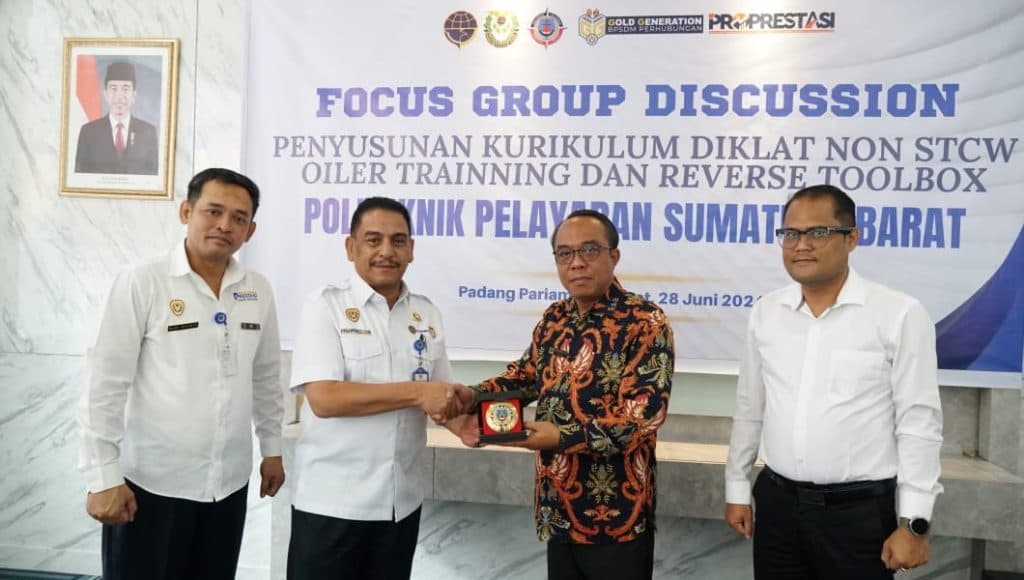
The Importance of Non-STCW Training
Non-STCW training has become very important because not every need and competency in the maritime industry can be met by the STCW standards. Oiler and Reverse Toolbox training are part of the effort to fill that gap, ensuring that maritime workers have skills and knowledge relevant to their duties and responsibilities in the field.
Expectations and Objectives
This FGD is expected to produce a better non-STCW training curriculum that matches the needs of the maritime industry. The active participation of the various parties at the event demonstrates a shared commitment to raising the quality of human resources in the maritime sector.
The FGD also served as a valuable exchange of information and experience for all participants. It is hoped that the outcome of these discussions can be implemented promptly and have a positive impact on the development of Indonesia's maritime industry.
The event closed with a question-and-answer session and a group discussion, in which participants could share views and suggestions on the curriculum drafting. The active involvement of participants in this session showed strong enthusiasm for, and concern about, improving the quality of maritime education and training.
In a spirit of cooperation and innovation, CIMA together with BPSDM Perhubungan Laut and other stakeholders is committed to continuing to support the development of high-quality human resources in Indonesia's maritime sector.