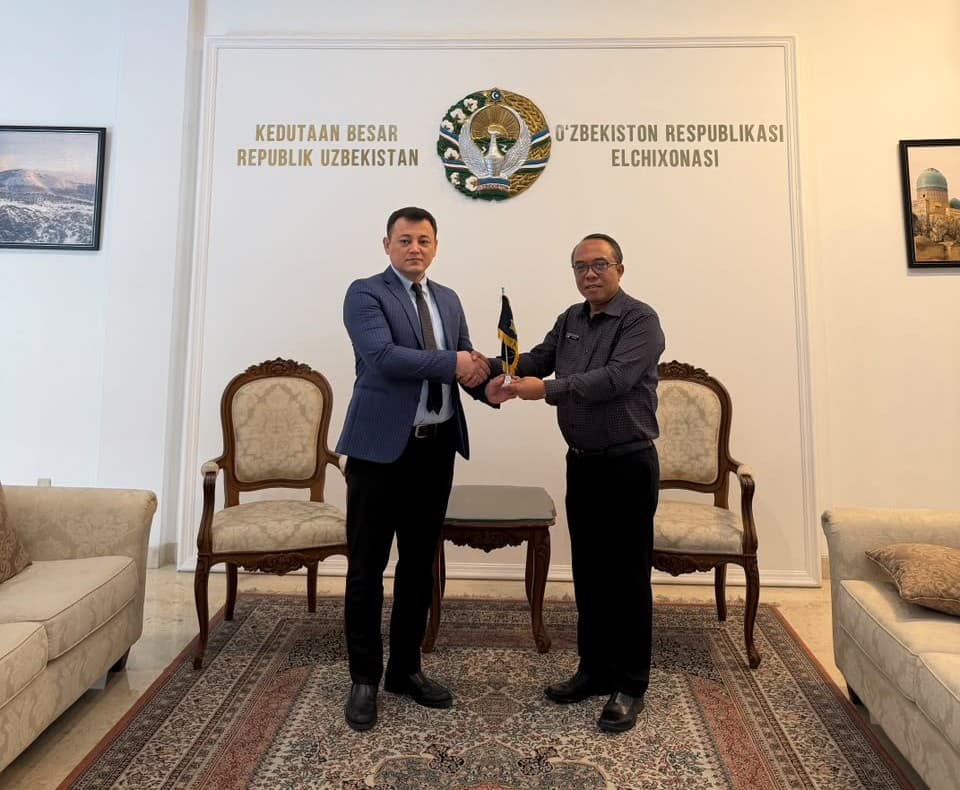
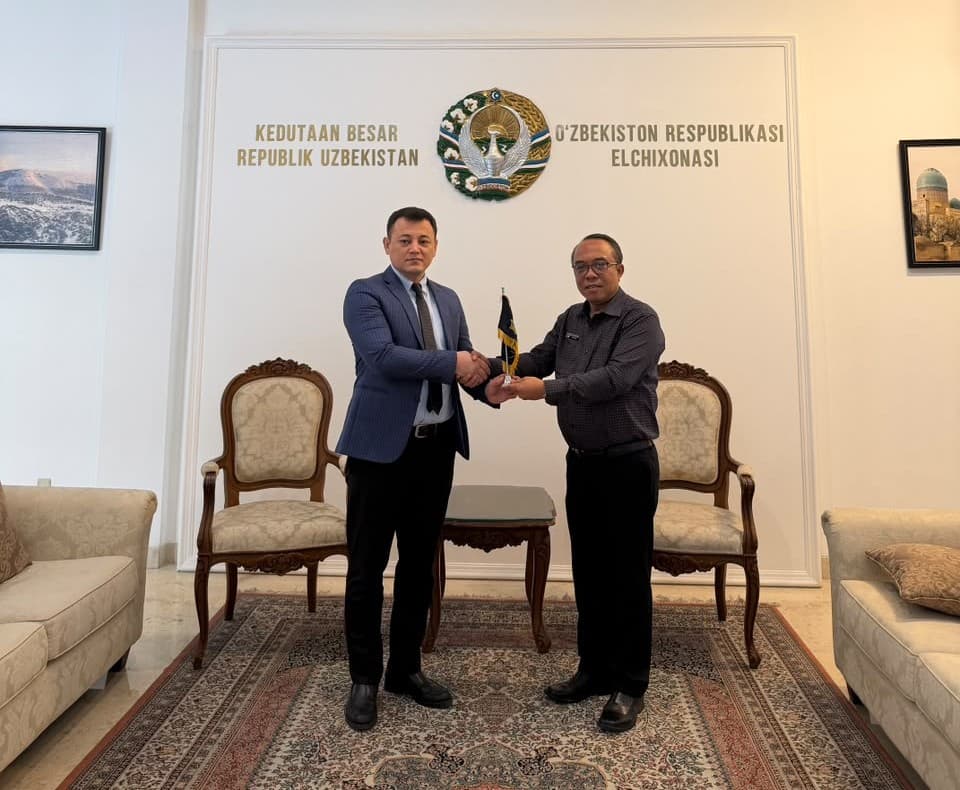
Jakarta, 12 August 2026 — CIMA held a meeting with the Embassy of the Republic of Uzbekistan in Indonesia to explore opportunities for cooperation in human resource development, particularly in the maritime sector and related industries. The meeting was received by Mr Abdurahmon Omonkulov, Consul at the Embassy of the Republic of Uzbekistan. CIMA was represented by Dr Gatot Cahyo Sudewo, Chairman of CIMA, Mr Dimas as CIMA Liaison Officer, and Ms Putri Eva Mayangsari as CIMA Communication & Public Affairs.
The meeting discussed the potential for collaboration between CIMA and the Embassy of the Republic of Uzbekistan, above all in preparing and developing Uzbek human resources so that they have the opportunity to build careers in the international maritime sector. The Embassy expressed its interest in placing Uzbek nationals in a number of fields, including the cruise industry, onboard hospitality, catering and galley, medical and healthcare including nursing staff, and various other supporting sectors of the shipping industry. Although Uzbekistan is a country without a coastline or seaports, it has dry ports and a large and steadily growing population.
Training and Certification Development
The cooperation discussed covers the development and delivery of maritime training, certification of training, curriculum development tailored to industry needs, and the training of professionals for the maritime and hospitality sectors. This is supported by the presence of various polytechnics and educational institutions in Uzbekistan that already have experience in preparing human resources for a range of industrial sectors.
Pilot Project for Recruiting Uzbek Workers
One of the matters that drew attention at the meeting was a planned pilot project to recruit Uzbek nationals. The government of Uzbekistan has written to its embassies worldwide about the possibility of running a pilot project involving around five Uzbek students or learners to gain the opportunity to work in Indonesia. The programme could cover the maritime sector as well as others, depending on the needs and opportunities available.
CIMA Urges Compliance with International Standards
In further discussion, CIMA raised a number of points that need attention, particularly concerning certification and international maritime standards. On the basis of the discussion, there are limitations in the provision of seafarer education and certification that meets international standards for certain positions requiring a Certificate of Competency (CoC).
For that reason, at this early stage the more realistic openings for workforce development lie in hospitality and onboard service — bar attendant, assistant cook, galley and kitchen staff, waiter and service staff, and other supporting positions.
CIMA also raised the possibility of exploring cooperation with Panama to support the development of competencies for prospective Uzbek seafarers. In addition, CIMA is open to involvement in the development and delivery of joint training, whether through educational institutions or polytechnics in Uzbekistan or through joint training programmes that could involve lecturers, instructors, material development, and industry-based training.
Beyond workforce development, CIMA also sees an opportunity to build a network or manning agency in Uzbekistan as part of a strategy to develop the talent pool and open access for Uzbek workers to the international maritime market.
As a follow-up, CIMA and the Embassy of Uzbekistan will hold a virtual meeting between 31 August and 4 September 2026 together with the Migration Agency and the Vocational Education Agency. The next discussion is expected to deepen the pilot project concept, identify workforce needs in the maritime, cruise, hospitality and medical sectors, and develop training and certification programmes.
The meeting marks a strategic first step in building cooperation between CIMA, the Embassy of the Republic of Uzbekistan, educational institutions and industry. Through that collaboration it is hoped that more opportunities will open for Uzbek workers to gain access to international employment, while at the same time widening the network and the role of Indonesia's manning industry at the global level.